
Financial Literacy Kids Game
📖 Table of Contents
- What Exactly Is the Financial Literacy Kids Game?
- The Real-Life Benefits of Playing the Game
- How to Customize the Game for Different Ages
- How to Set Up the Game at Home
- How to Make the Game a Daily Habit
- The Impact of the Game on a Child’s Development
- How to Introduce the Game to a New Child or Family
- Make It Your Way
- Frequently Asked Questions
When my son turned five, I realized that the time to teach him about money was now — not when he was older and less curious. I tried explaining concepts like saving and spending, but he’d just stare at me with that blank, innocent look that made me feel like I was speaking a foreign language. I needed a way to make money tangible and fun for him. That’s when I discovered a financial literacy kids game that turned our kitchen table into a classroom and our dinner-time conversations into lessons about budgeting and choices.[4]
This game, which I’ll call the 'Money Matters Challenge,' is a hands-on, interactive activity that doesn’t require a tablet or a screen. It’s built with simple materials you can find at home or in the classroom. It’s not just about teaching kids to count coins or recognize bills; it’s about helping them understand the value of money, the importance of delayed gratification. How to make decisions that matter. What surprised me most was how quickly my son started asking questions — not just about how to win the game. About why we need to save, why we can’t always buy everything, and what happens when you spend all your money.[5]
Over the course of a few weeks, we played the game almost every evening, and I saw real changes in his behavior. He started setting aside 'savings' from his allowance, he asked about the cost of things before we went shopping, and he even helped me plan a small project with a budget. It wasn’t just a game — it was a powerful tool that helped him build the financial habits that will last a lifetime. And the best part? It was something we could do together, as a family, without any pressure or stress.
Why You'll Love This Financial Literacy Kids Game
- It transforms abstract financial concepts into hands-on learning experiences that kids can grasp and enjoy.
- It builds essential life skills like budgeting, saving, and making smart spending choices from an early age.
- It encourages family interaction and shared learning, turning dinner-time into a mini classroom.
- It’s completely customizable, so you can adapt the game to your child’s interests, age, and learning level.
What Exactly Is the Financial Literacy Kids Game?
As of August 2026, at its core, the game is a modified version of the classic ‘Monopoly’ or ‘Piggy Bank’ games, but with a twist that focuses on real-life financial scenarios. It’s designed to be played with a small set of materials — like paper money, plastic coins, and a few simple cards — and it can be adapted to different age groups and learning goals. The game includes scenarios like saving for a toy, budgeting for a week of snacks, or planning a pretend trip.[1]
What makes this game special is that it’s not just about winning or losing — it’s about understanding the consequences of your choices. If you spend all your money on candy, you might not have enough to buy a new shirt. If you save for a rainy day, you might have more options when something unexpected happens. These lessons are not only educational but also deeply impactful in shaping a child’s relationship with money.
I’ve seen the game work in classrooms as well as in homes. Teachers have used it to teach basic math and financial concepts, while parents have used it to help their kids make smarter choices about their allowance and spending habits. It’s a versatile tool that’s easy to set up and even easier to play.
Don’t overcomplicate the game — the goal is to make learning about money feel like play, not a lesson. Let your child lead the way and guide them with gentle prompts and questions.
Part of our Literacy kids guide.
The Real-Life Benefits of Playing the Game

One of the most surprising outcomes of playing the game is how quickly children start applying what they’ve learned in real life. My son, for example, began asking for a ‘savings jar’ and started setting aside his allowance money. He even asked about the cost of things before we went shopping, which was a small but meaningful shift in his behavior.
The game also helps children understand the concept of delayed gratification. When they learn that they can save up for a bigger purchase instead of spending all their money on small items, they start making more thoughtful decisions. I’ve noticed this in other parents’ stories too — kids who used to buy every toy they saw are now saving up for specific items they really want.
Another benefit is that the game helps build confidence. When a child learns that they can manage their money and make smart choices, they gain a sense of accomplishment and self-reliance that extends far beyond the game itself.
“The game didn’t just teach my son about money — it taught him about responsibility and planning.”
Related: Financial literacy for kids app
Related: Financial literacy for kids jakarta
Related: Financial literacy for kids canada
Related: Financial literacy for kids unlocked
Related: Financial literacy questions for kids
How to Customize the Game for Different Ages
For younger children, the game can be simplified to focus on basic counting, recognizing coins, and making simple purchases. For example, you can use paper money with large numbers and pictures of everyday items. The goal is to help them understand the relationship between numbers and value.
For older children, the game can be expanded to include more complex scenarios like budgeting, taxes, and long-term savings. You can introduce cards that represent unexpected expenses or opportunities, such as a ‘discount’ card or a ‘tax’ card that requires them to give up a portion of their money.
Customizing the game also allows you to make it more engaging for your child. If they love dinosaurs, you can use dinosaur-themed money and cards. If they’re into baking, you can create a scenario where they have to budget for a pretend bakery. The possibilities are endless, and the more personalized the game, the more invested your child will be in learning.
You don’t need to buy any special materials to play the game — use what you already have. Paper, markers, and even old toys can be turned into game pieces or props.
“When my son turned five, I realized that the time to teach him about money was now — not when he was older and less…”— Financial Literacy for Teens editors
How to Set Up the Game at Home
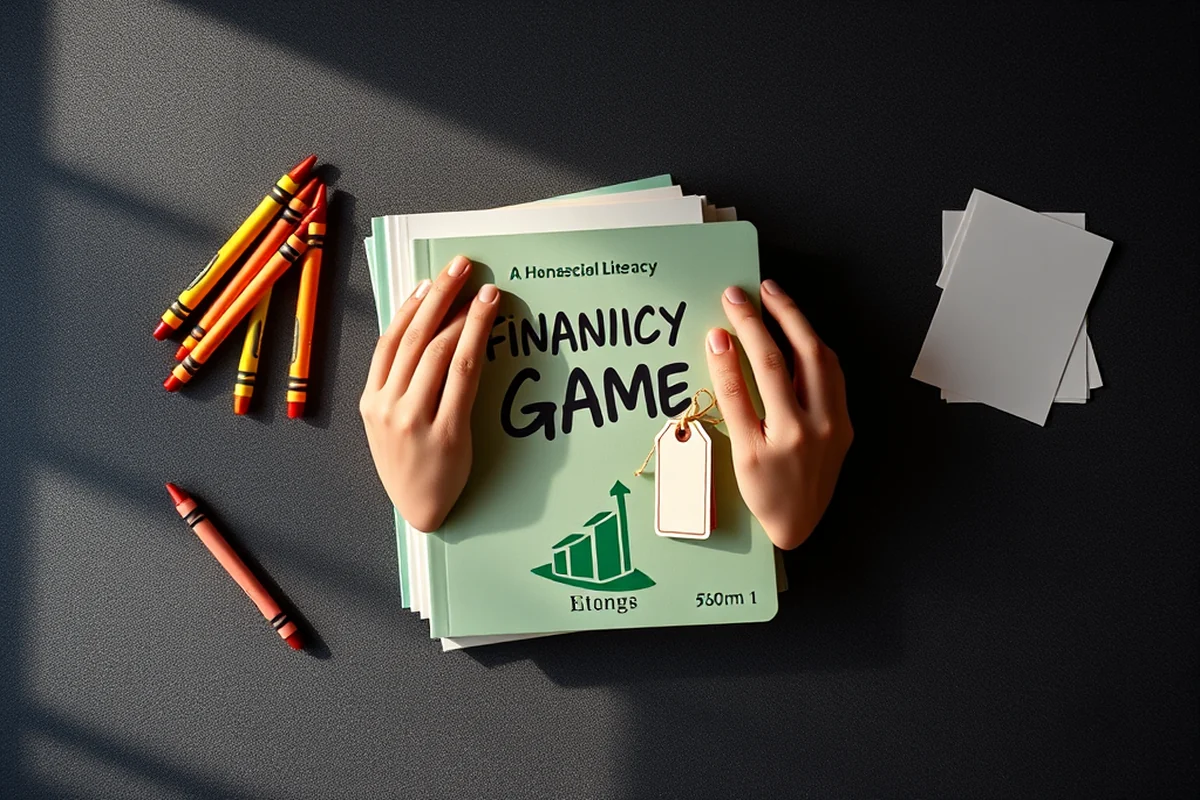
To get started, you’ll need a few basic materials: paper money or printed play money, plastic coins or handmade ones, and a set of game cards. The cards can be as simple as a list of items with prices or as complex as scenarios that involve budgeting and decision-making.
Once you have the materials, you can set up a pretend store or bank. You can use a cardboard box as a cash register or a drawer as a savings jar. The space doesn’t need to be elaborate — the goal is to create a fun and engaging environment where your child can learn and play.
When you’re ready to play, sit down with your child and explain the rules. You can let them choose whether they want to be the player or the banker, or you can take turns being the facilitator. The key is to make the experience interactive and enjoyable for both of you.
How to Make the Game a Daily Habit
One of the best ways to make the game a daily habit is to play it at the same time each day. Whether it’s during dinner, after school, or before bedtime, consistency helps your child develop a routine and learn to expect the game as part of their day.
Another way to reinforce the lessons is to tie the game into real-life situations. If your child is saving for a new toy, you can use the game to help them track their progress. If they’re learning about budgeting, you can use the game to simulate a week of spending choices.
You can also make the game a family activity. Invite all your children or even your spouse to play. This not only makes the game more fun but also helps your child see that financial literacy is a skill that everyone can benefit from.
The Impact of the Game on a Child’s Development
Beyond the financial lessons, the game helps children develop critical thinking skills. When they have to make decisions about how to spend their money, they’re learning to weigh options, think about consequences, and plan for the future. These are skills that will serve them well throughout their lives.
The game also helps children understand the value of money and the importance of working for what they want. When they see that they can earn money through chores or other activities, they start to connect their actions to their rewards. This understanding of cause and effect is a key part of emotional development.
Socially, the game encourages cooperation and communication. When children play with others, they learn to share, take turns, and make decisions together. These are essential social skills that can be developed through play and interaction.
“The game didn’t just teach my son about money — it taught him about responsibility and planning.”
How to Introduce the Game to a New Child or Family
When introducing the game to a new child, it’s important to start with a simple version of the game that doesn’t overwhelm them. You can use basic money, simple cards, and a short explanation of the rules. The goal is to make the child feel comfortable and excited about playing.
For families who are new to the game, you can set up a demo game together. This allows everyone to see how the game works and gives them a chance to ask questions or make suggestions. It’s a great way to build enthusiasm and ensure that everyone feels included.
You can also use the game as a way to bond with your child or other family members. Whether you’re playing with your child, your spouse, or your siblings, the game provides a fun and educational activity that everyone can enjoy.
🧮 Money Matters Challenge for Younger Kids
A simplified version of the game designed for children ages 3-5, focusing on basic counting and recognition of coins and bills.
📈 Financial Literacy for Older Kids
An advanced version of the game for children ages 7-12, introducing concepts like budgeting, taxes, and long-term savings.[2]
⏱️ No-Prep Version
A quick and easy version of the game that can be played with just paper and pencils, making it ideal for spontaneous learning sessions.
👥 Group Version
A version of the game designed for multiple players, encouraging teamwork and collaboration as they work together to achieve shared financial goals.
📚 Extension Version
An expanded version of the game that includes additional scenarios and challenges, perfect for parents who want to continue learning with their children.
| The mistake | Why it happens | The fix |
|---|---|---|
| Making the game too complicated for a young child. | If the game is too complex, it can overwhelm the child and discourage them from playing or learning. | Simplify the game by using fewer materials, simpler rules, and familiar scenarios that the child can understand. |
| Focusing too much on winning or losing. | When the game becomes about winning or losing, it can shift the focus away from learning and make the experience stressful for the child. | Encourage the child to focus on the process of learning and making choices, rather than on winning or losing. |
| Not allowing the child to take the lead. | If the parent or teacher takes control of the game, it can make the child feel like they’re not in charge of their choices or learning. | Let the child take the lead in playing the game and making decisions, and guide them with gentle prompts and questions. |
| Not adapting the game to the child’s interests. | If the game isn’t aligned with the child’s interests or learning level, it may not be as engaging or effective. | Customize the game to include themes, scenarios, and materials that the child enjoys and can relate to. |
Financial Literacy Kids Game
Common Questions
Can I play the game without any special materials?
How long does the game take to play?
What if my child doesn’t want to play the game?
Can I use the game to teach my child about investing?
Cite this guide
Financial Literacy for Teens (2026). Financial Literacy Kids Game. https://cashcourage.com/financial-literacy-kids-game/[3]
Feel free to cite or share this guide.
References
- The Best Finance Games for Kids in 2026 (birzeit.edu)
- Borrowing and lending: Two financial concepts kids learn by playing ... (canr.msu.edu)
- Summer Tips: Making Financial Literacy a Healthy Habit (asuprep.asu.edu)
- For Students | AZ Treasury Office (aztreasury.gov)
- Teaching Finance Skills to Kids and Teens - Bentley University (bentley.edu)