
Financial Literacy Bingo Printable
📖 Table of Contents
When my son turned 8, I realized I had no idea how to teach him about money. We'd talk about saving and spending, but it always felt vague and distant. One day, after watching a YouTube video on financial literacy for kids, I decided to try a game that actually made concepts tangible. That's when I discovered the Financial Literacy Bingo Printable — a game that transformed abstract ideas like 'interest' and 'budgeting' into a fun, interactive experience.
I printed the bingo cards, grabbed some markers, and sat down with my son for what I thought would be a quick activity. What I didn't expect was the way his eyes lit up as he matched terms like 'compound interest' with real-life examples. It wasn't just a game; it was a way for him to understand the world of money in a way that felt natural and engaging.[1]
Fast forward to today, and that simple bingo game has become a cornerstone of our family's approach to financial education. It's not just for kids — I've used it with friends, parents, and even in classrooms. The Financial Literacy Bingo Printable has helped me see that teaching money skills doesn't have to be boring. It can be fun, interactive, and deeply impactful.
Why You'll Love This Financial Literacy Bingo Printable
- It makes complex financial concepts accessible and engaging for kids of all ages.
- It's a low-cost, no-fuss way to introduce financial literacy in a classroom or at home.
- It offers a hands-on, interactive learning method that reinforces key vocabulary and ideas.
- It's adaptable for different learning levels and can be used in various educational settings.
What Makes This Bingo Game Work?
As of August 2026, the Financial Literacy Bingo Printable works by combining financial vocabulary with real-life scenarios. Each card features terms like 'savings account', 'budget', and 'interest', and players match these with explanations or examples.
What sets this game apart is its ability to simplify complex topics without dumbing them down. Instead of just memorizing terms, kids learn how they apply in everyday situations. For example, when I played the 'compound interest' card, my son immediately asked how it worked with his piggy bank savings.
This game is a great way to spark curiosity and open-ended conversations about money. Whether you're using it at home or in the classroom, it encourages kids to think critically about financial decisions.
When playing, use examples from your own life. If a child picks the 'compound interest' card, explain how your savings account grows over time. This personalizes the learning experience.
How to Get Started with the Bingo Game
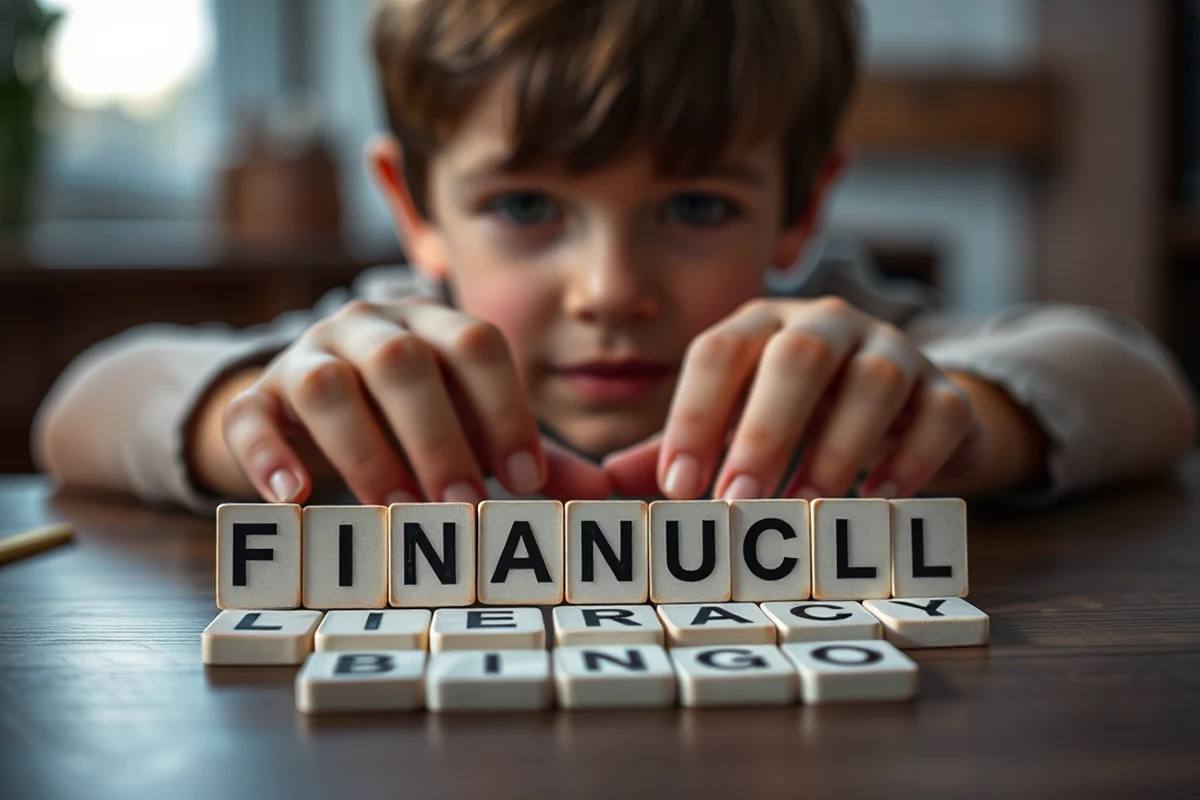
The first step is to download the printable from an educational website or resource hub. Once you have the file, you can print it out on cardstock for durability. I found that printing in color made the cards more engaging for my son.
Next, you'll need some markers or bingo chips. I used small erasers I had lying around the house. It's important to ensure that the cards are clearly visible and that the terms are easy to read.
Once everything is ready, gather the players and explain the rules. The goal is to find matches between the terms and their explanations, and the first person to complete a row wins. It's a simple, low-pressure way to introduce financial literacy concepts.
Start small, but start now — the earlier you teach financial literacy, the more prepared kids will be for the future.
Related: Financial literacy degree
Related: Financial literacy printables
Related: Financial literacy essentials for dummies
Related: How to define financial literacy
Related: What is financial literacy program
Why This Game Is Perfect for Kids
Children learn best through play, and the Financial Literacy Bingo Printable capitalizes on that. It's designed with bright colors, simple language, and relatable scenarios that help kids grasp abstract concepts.
I've used this game with kids as young as 5 and as old as 12, and it's always been a hit. The younger kids enjoy the visual elements, while the older ones appreciate the chance to discuss more complex financial ideas.[2]
What's more, this game allows for customization. If you're teaching a group of kids with different learning levels, you can create cards tailored to their needs. This flexibility makes the game adaptable for a wide range of educational settings.
If you're using the game with a group of kids, consider creating different versions of the cards based on their skill level. This ensures that everyone can participate and learn at their own pace.
“When my son turned 8, I realized I had no idea how to teach him about money.”— Financial Literacy for Teens editors
How to Use the Game at Home

At home, the game can be played during family game nights or used as a way to reinforce lessons learned in school. It's a great opportunity to involve the whole family and encourage discussion about money.
I often play the game with my son after dinner, and it's become a bonding activity. It's also a great way to teach him about budgeting, saving, and investing. The game naturally leads to conversations about how to manage money in real life.
Another benefit of playing at home is that it allows for more personalized instruction. If my son doesn't understand a term, I can explain it in a way that makes sense to him. This kind of one-on-one learning is invaluable.
How to Use the Game in the Classroom
In the classroom, the game can be used as a warm-up activity or as part of a lesson on financial literacy. It's a great way to get students engaged and to assess their understanding of key concepts.
I've seen teachers use this game as part of a larger unit on personal finance. It's a fun way to review material and reinforce learning. Students enjoy the interactive nature of the game, and it helps them retain information better.
What's more, the game can be adapted for different grade levels. Teachers can create cards that are tailored to the age and learning level of their students. This makes it a versatile tool that can be used across the curriculum.
The Benefits of Playing the Game Regularly
When I play the game with my son regularly, I notice a difference in how he approaches financial decisions. He's more aware of the value of money and understands the importance of saving and spending wisely.
This game also helps build confidence in managing money. When my son correctly identifies a term like 'budget', he feels a sense of accomplishment. This positive reinforcement is key to developing a healthy relationship with money.
Over time, the game becomes more than just a fun activity — it's a tool that helps kids develop the skills they need to make informed financial decisions in the future.
Consistency is key — the more kids play the game, the more they learn and the more confident they become with money.
How to Make the Game More Interactive
One way to make the game more interactive is to incorporate real-life scenarios. For example, when a player matches a term like 'credit card', you can discuss how to use a credit card responsibly.
Another idea is to include a 'question of the day' that relates to the financial concept being played. This encourages deeper thinking and discussion about the topic.
You can also use the game as a springboard for role-playing activities. For instance, after playing the game, you can have a mock shopping trip where kids use a budget to buy items. This helps them apply what they've learned in a practical way.
👶 Younger Kids Version
Simplified terms and visuals to make financial literacy accessible to children as young as 3 years old.
🧑🎓 Older Kids Version
Advanced terms and scenarios tailored for middle and high school students learning about personal finance.
🧾 No-Prep Version
A digital version of the game that can be played on a tablet or computer with no printing required.
👥 Group Version
A larger-scale version of the game designed for classroom use with multiple players and teams.
🚀 Extension Version
A version of the game that includes follow-up activities and lessons to reinforce learning.
| The mistake | Why it happens | The fix |
|---|---|---|
| Using too many complex terms at once | Overloading kids with too many terms at once can be overwhelming and may hinder their understanding of the material. | Start with a few key terms and gradually introduce more as the kids become more comfortable with the concepts. |
| Not explaining the terms clearly | If the terms are not explained clearly, kids may not understand their meaning or how they apply to real life. | Take the time to explain each term in simple, relatable language. Use real-life examples to help kids grasp the concepts. |
| Playing the game too infrequently | Playing the game only once or twice may not be enough to reinforce the concepts and build long-term understanding. | Make the game a regular part of your learning routine. Play it at least once a week to help reinforce the concepts and build confidence. |
| Focusing only on the game and not on the discussion | If the game is played without discussion, kids may not understand the real-world applications of the concepts. | After playing the game, take time to discuss the terms and how they apply to everyday life. This helps kids connect the concepts to their own experiences. |
Financial Literacy Bingo Printable
Common Questions
Can I use the Financial Literacy Bingo Printable with adults?
How long does each game session take?
Are there different versions of the game for different age groups?
Can I customize the game to fit my teaching style?
References
- College Knowledge Games & Activities - GEAR UP Washington State (gearup.wa.gov)
- Code of Virginia Code - Article 1.1:1. Charitable Gaming - Virginia Law (law.lis.virginia.gov)
Cite this guide
Financial Literacy for Teens (2026). Financial Literacy Bingo Printable. https://cashcourage.com/financial-literacy-bingo-printable/
Feel free to cite or share this guide.