
What Is Financial Literacy Month
📖 Table of Contents
- What Exactly Is Financial Literacy Month?
- Why Financial Literacy Matters for Kids
- How Financial Literacy Month Impacts Students
- The Role of Schools in Financial Literacy Month
- The Power of Parental Involvement
- Community Programs and Resources
- The Long-Term Benefits of Financial Literacy
- Make It Your Way
- Frequently Asked Questions
It was the first week of April. I found myself staring at a calendar, wondering why I had never noticed the faint, unassuming label: 'Financial Literacy Month.' Up until that moment, I had always associated financial education with late-night infomercials or vague advice from well-meaning relatives. But that month changed everything. It wasn't just about learning how to budget; it was about understanding the invisible systems that govern our money, our future, and our freedom. Financial Literacy Month is more than a label—it's a lifeline for young minds, and I wish I had known it earlier.
I remember the first time I sat down with my 12-year-old cousin and asked her, 'How would you handle a $500 emergency?' She looked at me like I was speaking a foreign language. That moment stuck with me. It wasn't just a lack of knowledge; it was a lack of confidence, a gap that Financial Literacy Month aims to close. The month isn't just about numbers and spreadsheets—it's about giving kids the tools to think critically about money, to plan for the future, and to make informed choices.
What struck me most was how quickly the concept of Financial Literacy Month took root in my life. I started reading articles, watching videos, and even downloading a few apps that were designed to make financial education accessible to kids. Within a few weeks, my cousin was calculating her allowance, setting up a savings plan, and even asking me questions I hadn't considered. It was like opening a door I didn't know existed. Financial Literacy Month isn't just an event—it's a movement, and one that deserves more attention than it often gets.
Why You'll Love This Article
- You'll understand how Financial Literacy Month gives kids a real-world edge in school and life.
- You'll discover easy, impactful ways to teach kids about money, even if you're not an expert yourself.
- You'll learn how to make financial education fun, engaging, and part of everyday life.
- You'll find actionable tips that can be used in classrooms, homes, and even after-school programs.
What Exactly Is Financial Literacy Month?
As of September 2026, Financial Literacy Month, observed every April, is a national initiative aimed at empowering young people with the knowledge they need to make smart financial decisions. It's not just about saving money—it's about understanding the value of money, the importance of credit, and how to avoid debt. This month is a call to action for educators, parents, and communities to come together and provide kids with the tools they need to handle the complex world of personal finance.
I remember how confusing it was to learn about interest rates, inflation, and compound growth when I was in high school. Financial Literacy Month was created to prevent that confusion and make financial education more accessible to younger audiences. It's a time when schools introduce financial literacy programs, parents talk about money with their kids, and communities host events that make learning about money fun and engaging.
In my experience, the most valuable part of Financial Literacy Month is the way it shifts the conversation from 'How much money do I have?' to 'How can I use my money wisely?' It's about building a foundation that lasts a lifetime. Whether it's through classroom lessons, family discussions, or community events, Financial Literacy Month is a powerful tool for shaping the financial future of the next generation.
Set aside time each week to talk about money in your household. Discuss things like allowance, saving goals, and even how the family pays bills. It's a simple but powerful way to make financial literacy part of everyday life.
Part of our Literacy course guide.
Why Financial Literacy Matters for Kids
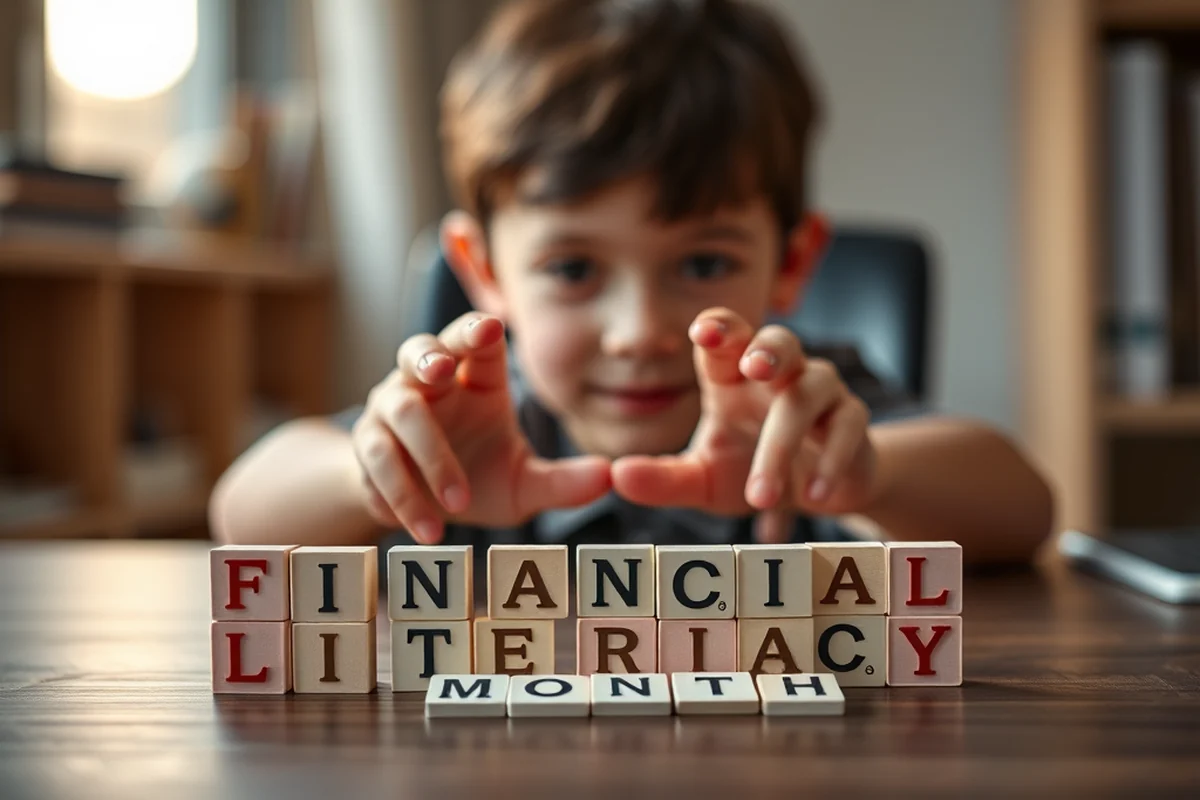
When I first started teaching my cousin about money, I didn't realize how much it would change her perspective. She used to think that money was something you just earned or spent. But once we started talking about budgeting and saving, she began to see money as a tool that could help her achieve her goals. This is the power of financial literacy—it gives kids a sense of control over their financial future.
Research shows that kids who learn about money at a young age are more likely to make smart financial decisions as adults. They understand the value of saving, the risks of debt, and the importance of investing. In a world where financial decisions can impact everything from college to career, this knowledge is essential.[1]
I once saw a 10-year-old child calculate how long it would take to save for a video game. It was impressive, but more than that, it was empowering. Financial literacy gives kids the confidence to make decisions, set goals, and take control of their future. It's not just about money—it's about empowerment.
Money is power, and financial literacy is the key.
Related: When is financial literacy month
Related: What is financial literacy course
Related: Financial literacy for youth nyc
Related: Financial literacy homeschool course
How Financial Literacy Month Impacts Students
During Financial Literacy Month, I noticed a shift in the way my cousin and her classmates approached money. Instead of just seeing money as something they earned or spent, they started thinking about how to use it wisely. It was like turning on a light in their minds, illuminating a path that they hadn't realized existed before.
One of the most impactful changes I saw was how students began to approach their allowances and savings accounts with a new level of seriousness. They weren't just putting money in a piggy bank—they were setting goals, tracking their spending, and even learning about interest. It was amazing to see how quickly these concepts took root in their lives.
Financial Literacy Month doesn't just teach kids about money—it helps them understand the real-life consequences of their financial decisions. Whether it's saving for a new bike or learning how to budget for a school project, the lessons are practical and immediate. This is the real power of Financial Literacy Month: it turns theory into action.
When teaching kids about money, use examples they can relate to, like buying a snack, saving for a toy, or planning a family outing. Real-life scenarios make financial concepts more tangible and easier to understand.
“It was the first week of April, and I found myself staring at a calendar, wondering why I had never noticed the faint, unassuming label…”— Financial Literacy for Teens editors
Related: Which month is financial literacy month
The Role of Schools in Financial Literacy Month

During Financial Literacy Month, schools across the country introduce a variety of programs designed to teach kids about money in a structured and engaging way. These programs can range from classroom lessons on budgeting to interactive games that simulate real-world financial decisions.
One of the most effective ways schools teach financial literacy is through hands-on activities. For example, some schools have students create their own budgets, track their spending, or even participate in mock stock market games. These activities make learning about money fun and interactive.
I remember visiting a school where students were learning about credit and debt through role-playing exercises. They acted out scenarios where they had to make financial decisions, such as whether to buy a car or save for college. It was a powerful way to help them understand the long-term consequences of their choices.
The Power of Parental Involvement
As a parent or caregiver, one of the most important things you can do during Financial Literacy Month is to be open and honest about money. Whether it's talking about allowances, saving for a vacation, or managing household expenses, these conversations help kids understand the real-world value of money.
I found that the more I talked about money with my cousin, the more she began to see it as a part of everyday life. She wasn't just learning about saving and spending—she was learning how to make decisions that would affect her future. These conversations helped her build a foundation for financial independence.
It's not always easy to talk about money with kids, but it's essential. By being involved, parents can help their children make informed financial decisions and build the confidence they need to succeed in the future.
Community Programs and Resources
During Financial Literacy Month, communities across the country offer a variety of programs and resources designed to help kids and teens learn about money. These can include workshops, online courses, and even local events that bring together educators, parents, and financial experts.[2]
One of the most valuable resources I found was a local financial literacy fair that offered free workshops on budgeting, saving, and investing. These events were a great way to meet other parents, learn new techniques, and get hands-on experience with financial tools.
I also discovered a number of online resources that were specifically designed for kids and teens. From interactive budgeting games to videos explaining the basics of credit, these tools made learning about money fun and engaging.
A little knowledge can go a long way when it comes to financial literacy.
The Long-Term Benefits of Financial Literacy
The benefits of financial literacy don't just stop during Financial Literacy Month—they extend into the future. Kids who learn about money early are more likely to make smart financial decisions as adults, from managing debt to investing for retirement.
I saw the long-term impact of financial literacy when I followed up with my cousin a year after Financial Literacy Month. She had already started saving for college, was tracking her expenses, and even had a plan to pay off her student loans. It was clear that the lessons she had learned during Financial Literacy Month were still with her.
Financial literacy isn't just about money—it's about empowerment. It gives kids the tools they need to make informed decisions, take control of their future, and build a life of financial independence.
🎯 Interactive Budgeting Game
A hands-on activity that helps kids learn how to budget by allocating 'money' to different expenses.
🗣️ Family Money Talks
A simple but powerful way to teach kids about money through open and honest conversations with family members.
💻 Online Financial Literacy Courses
A no-prep option that allows kids and teens to learn about money through interactive online courses and videos.
👥 Group Financial Workshops
A community-based activity that brings together kids, parents, and financial experts to learn about money in a group setting.
💰 Real-Life Saving Challenges
An extension activity that challenges kids to save money for a specific goal, like buying a new toy or saving for a vacation.
| The mistake | Why it happens | The fix |
|---|---|---|
| Not making financial education part of everyday life. | Financial literacy is more effective when it's integrated into daily routines, not just taught in isolation. | Incorporate money lessons into everyday activities, like budgeting for groceries or discussing savings goals. |
| Overloading kids with too much information at once. | Kids learn best when financial concepts are introduced gradually and in a way that's easy to understand. | Teach one concept at a time, using simple examples and hands-on activities to reinforce learning. |
| Ignoring the role of emotions in financial decisions. | Financial literacy isn't just about numbers—it's also about understanding how emotions like fear, excitement, and greed can affect money decisions. | Teach kids how to manage emotions when making financial decisions, using real-life scenarios and role-playing exercises. |
| Failing to track progress or set goals. | Without clear goals, it's hard to measure the impact of financial education on kids and teens. | Set specific financial goals for kids, like saving for a toy or a trip, and track their progress regularly. |
What Is Financial Literacy Month
Common Questions
What is the best way to teach kids about money?
How can parents get involved in Financial Literacy Month?
What are the long-term benefits of financial literacy?
Why is Financial Literacy Month important for teens?
References
- Empowering Youth by Building Early Financial Literacy Skills (extension.psu.edu)
- Secretary Bessent: “Financial Literacy Unlocks Opportunity for Every ... (home.treasury.gov)
Cite this guide
Financial Literacy for Teens (2026). What Is Financial Literacy Month. https://cashcourage.com/what-is-financial-literacy-month/
Feel free to cite or share this guide.