
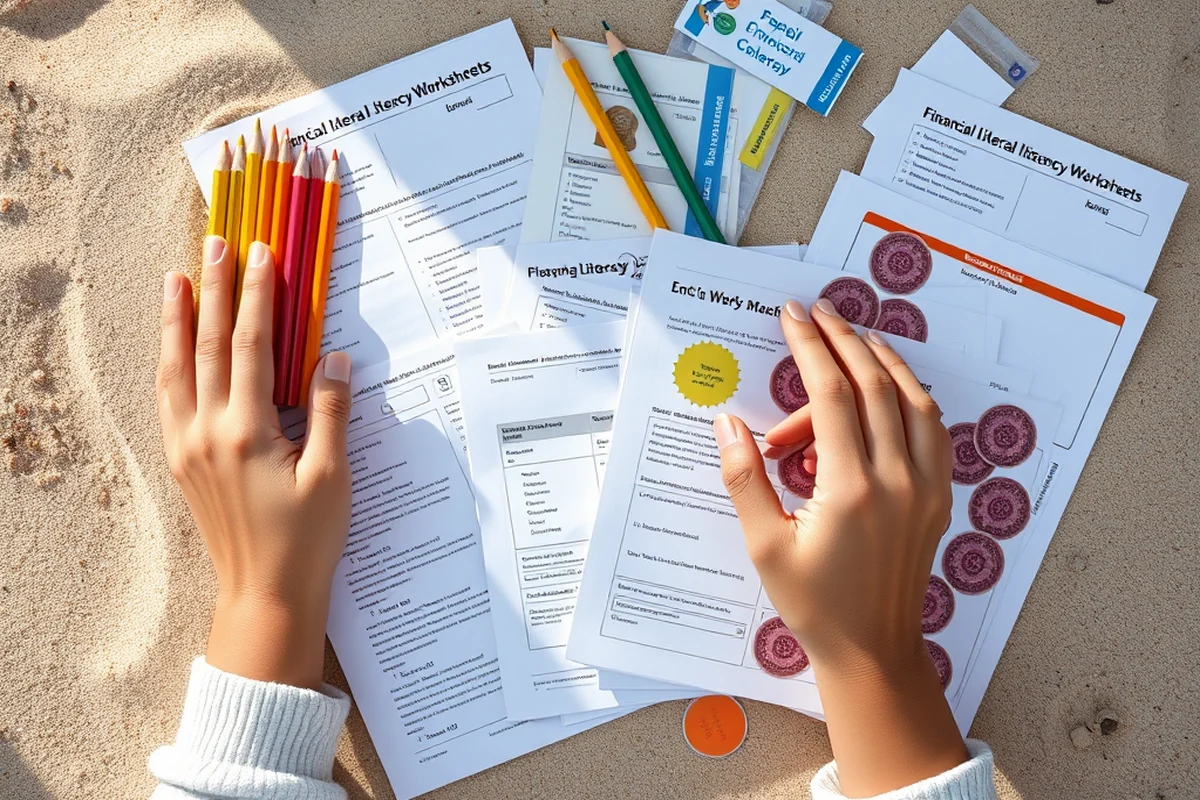
Financial Literacy Worksheets For Teens
📖 Table of Contents
I remember the first time I sat down with my teenage daughter to talk about money. She looked at me like I had just asked her to solve a complex physics problem. I realized right then that financial literacy wasn’t something we were taught in school—it was something we had to learn on our own. That moment led me to create a series of financial literacy worksheets for teens, because the truth is, most teens don’t know where to start with managing their money, saving for the future, or making smart spending choices.
These worksheets are not just pages of numbers and charts. They’re tools that help teens understand the real, tangible impact of their financial decisions. Whether it’s learning how to track income and expenses, or calculating the cost of a monthly cell phone plan, the goal is to make financial concepts feel accessible and actionable. I designed each worksheet with the belief that knowledge is power—and that power starts with understanding how money works.
Over the years, I’ve seen teens transform from confused and overwhelmed to confident and in control. One of my students, for example, used the budgeting worksheet to save up for a used car, which she needed to get a part-time job. It wasn’t just about the car—it was about the confidence she gained in managing her own money. That’s the real value of these financial literacy worksheets for teens.
Why You'll Love This Activity
- Provides hands-on learning through interactive worksheets
- Helps teens understand real-world financial concepts
- Encourages goal-setting and long-term planning
- Easy to customize for different age groups and skill levels
Understanding the Basics of Financial Literacy
As of August 2026, the first step in building financial literacy is understanding the basics. My worksheets start with simple topics like income, expenses, and savings. Each worksheet includes a breakdown of where money comes from and where it goes. For example, one worksheet asks teens to list all the sources of their income and track where their money goes each week.
I’ve found that teens often struggle with the difference between needs and wants. One of the worksheets includes a list of expenses, and teens must categorize them as either needs or wants. This helps them see how their spending habits impact their savings and long-term goals.
A real-life example of this is a teen I worked with who used the worksheet to realize that buying a new video game each month was actually a want, not a need. This small change allowed her to save up for a summer camp, which was a need she hadn’t even considered.
Use the ‘Needs vs. Wants’ worksheet to help teens understand how their spending choices affect their overall financial health.
Part of our Worksheets guide.
Tracking Income and Expenses

One of the most common challenges teens face is not knowing where their money goes. My worksheets include a simple income and expense tracker that helps them monitor their spending habits over a month. By filling out this tracker, they can see exactly where their money is going and where they might be overspending.
I’ve noticed that when teens track their income and expenses, they become more conscious of their spending. For example, one teen used the tracker to realize that she was spending too much on coffee every day. After cutting that cost in half, she was able to save up for a new backpack that she needed for school.
This worksheet is particularly useful for teens who are new to managing their own money. It gives them a clear picture of their financial situation and helps them make more informed decisions about how to spend and save.
Tracking your money is like a roadmap to your financial goals.
Related: Financial literacy among teens
Related: Financial literacy rate in nepal
Related: Financial literacy in teens
Related: Financial literacy for teens uk
Related: Financial literacy test for teens
Related: The complete guide to financial literacy for teens
Creating a Budget
Creating a budget is one of the most important financial skills a teen can learn. My worksheets guide them through the process of setting financial goals and allocating their money accordingly. Each worksheet includes a sample budget template that they can customize based on their income and expenses.
I’ve seen how a budget can transform a teen’s financial habits. For example, a teen who used the budgeting worksheet was able to save up for a car by setting aside a specific amount each week. This helped him avoid debt and gave him a sense of control over his money.
The key to a successful budget is consistency. By using the worksheet regularly, teens can stay on track with their financial goals and make adjustments as needed.
This rule suggests allocating 50% of income to needs, 30% to wants, and 20% to savings and debt. Use this as a guide when creating a budget with your teen.[1]
“I remember the first time I sat down with my teenage daughter to talk about money.”— Financial Literacy for Teens editors
Related: Financial literacy tips for teens
Related: How to teach teens financial literacy
Related: Best financial literacy books for teens
Related: Financial literacy tools for teens
Related: How much are financial literacy classes
Understanding Credit and Debt
Credit and debt are important topics that most teens don’t understand. My worksheets include exercises that explain how credit cards, loans, and interest work. One worksheet asks teens to calculate how much interest they would pay on a credit card balance over a year.
I’ve found that when teens learn about the consequences of debt early on, they are more likely to make responsible financial decisions. For example, one teen used the worksheet to understand how a $500 credit card balance with a 20% interest rate would grow over time. This made her more cautious about using her credit card for non-essential purchases.[2]
The goal of these worksheets is to help teens avoid the common mistakes that come with credit and debt. By learning about interest rates, minimum payments, and the long-term effects of debt, they can make more informed financial choices.
Related: Financial literacy for teens online
Setting Financial Goals
Setting financial goals is an essential part of building financial literacy. My worksheets guide teens through the process of setting short-term and long-term goals, such as saving for a new phone, a car, or even college. Each worksheet includes a goal-setting template that helps them break down their goals into manageable steps.
I’ve seen how setting financial goals can transform a teen’s approach to money. One teen used the worksheet to save up for a concert ticket by setting a monthly savings target. This helped her stay motivated and on track with her goal.
The key to successful goal-setting is making the goals specific, measurable, and achievable. By using the worksheet, teens can track their progress and stay motivated to reach their financial goals.
Related: Importance of financial literacy for teens
Learning About Investment
Investing may seem complicated, but it doesn’t have to be. My worksheets introduce the basics of investing in a simple and engaging way. One worksheet includes a simulation where teens can choose different investment options and see how their money grows over time.
I’ve found that when teens learn about investing early on, they are more likely to make informed financial decisions in the future. For example, one teen used the investment simulation to understand how compound interest works and how investing can help grow their money over time.
The goal of these worksheets is to help teens understand that investing is not just for adults. By learning the basics, they can start building their financial future early.
The earlier you start investing, the more time your money has to grow.
Related: Why is financial literacy important for young adults
Reviewing and Reflecting on Financial Progress
Reviewing financial progress is an important step in building financial literacy. My worksheets include a section where teens can reflect on their progress and make adjustments to their budget or savings plan. This helps them see how their financial habits are affecting their goals.
I’ve seen how regular reviews can help teens stay motivated and focused. For example, one teen used the worksheet to review her progress each month and made adjustments to her spending habits. This helped her save more money for her future.
Simulating Real-World Financial Scenarios
Financial literacy worksheets can be enhanced by incorporating simulated scenarios such as managing a monthly paycheck, handling unexpected expenses, or making purchase decisions with limited funds. For instance, a worksheet might ask teens to allocate $2,500 across rent, utilities, groceries, and savings, mirroring the realities of adult life. These exercises force teens to think critically about trade-offs, such as whether to buy a cheaper item now or save for a more expensive one later. This approach helps them grasp the long-term implications of their financial choices in a safe, controlled environment.
Incorporating time-based challenges, such as planning a budget for a month or calculating the impact of an interest rate over five years, adds depth to the learning experience. I once used a simulation where teens had to manage a $3,000 budget for a month, including unexpected costs like a car repair or medical bill. Many were surprised by how quickly their savings could deplete, emphasizing the importance of emergency funds. These hands-on activities make abstract concepts like compound interest and opportunity cost more tangible and relatable.
To make the learning even more practical, worksheets can include real-life examples, such as comparing loan offers, analyzing credit card statements, or evaluating investment options. For example, a teen might be asked to calculate the total cost of a $500 purchase with a 15% interest rate over two years, which results in a $174.45 finance charge. These exercises not only teach math skills but also highlight the consequences of poor financial decisions. By immersing teens in realistic scenarios, they gain confidence in making informed choices and develop a habit of financial responsibility early in life.
🧮 Younger Teens (Ages 12-14)
Simplified worksheets with visual aids and basic money concepts, ideal for middle schoolers.
💼 Older Teens (Ages 15-18)
Advanced worksheets covering credit, debt, and investment, suitable for high school students.
📄 No-Prep Version
Ready-to-print worksheets that require no additional materials or preparation.
🤝 Group Version
Interactive worksheets designed for classroom or group activities, encouraging collaboration and discussion.
🚀 Extension Activities
Additional worksheets that allow teens to explore more advanced financial topics and real-world scenarios.
| The mistake | Why it happens | The fix |
|---|---|---|
| Not reviewing financial progress regularly | Failing to review financial progress can lead to missed goals and poor financial habits. | Use the review section of the worksheets regularly to track progress and make necessary adjustments. |
| Ignoring the importance of budgeting | Without a budget, it’s easy to overspend and fall into debt. | Create a budget using the budgeting worksheet and stick to it consistently. |
| Not understanding the difference between needs and wants | This can lead to unnecessary spending and poor financial decisions. | Use the ‘Needs vs. Wants’ worksheet to help your teen understand the difference and make informed spending choices. |
| Avoiding discussions about credit and debt | Not understanding credit and debt can lead to financial pitfalls in the future. | Use the credit and debt worksheets to help your teen learn about the consequences of debt and make informed financial choices. |
Financial Literacy Worksheets For Teens
Common Questions
How can I use these worksheets at home?
Are these worksheets suitable for all age groups?
How do these worksheets help with financial literacy?
Can I customize the worksheets?
References
- A financial empowerment toolkit for social services programs. (files.consumerfinance.gov)
- Personal Finance Worksheets For High School (training.jacksonms.gov)
Cite this guide
Financial Literacy for Teens (2026). Financial Literacy Worksheets For Teens. https://cashcourage.com/financial-literacy-worksheets-for-teens/
Feel free to cite or share this guide.